
How strong is fiberglass tubing?

How strong is fiberglass tubing?
Contrary to commonly seen aluminum alloys and stainless steels, fiberglass tubing is even stronger, making it capable of providing continuous and reliable structural support and load-bearing capacity in various applications.

Lightweight properties of fiberglass tubing
Compared to metal pipes, fiberglass tubing has a lighter weight. This makes it highly useful in applications where reducing structural loads is essential. Its lightweight characteristics also facilitate easier transportation and installation.
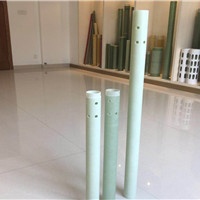
Other advantages of fiberglass tubing
Corrosion resistance: Fiberglass tubing exhibits excellent resistance to corrosion. It demonstrates resistance to various common chemicals and environmental conditions, including acids, alkalis, saltwater, and different chemical solutions. This makes fiberglass tubing widely applicable in industries such as chemical engineering, wastewater treatment, and marine environments characterized by corrosive conditions.
High-temperature performance: Fiberglass tubing exhibits good high-temperature stability. It can operate in high-temperature environments and possesses heat resistance characteristics. This makes fiberglass tubing widely used in high-temperature applications within thermal engineering, power plants, and the petrochemical industry.
High elastic modulus: Fiberglass tubing has a high elastic modulus, displaying good stiffness and bending resistance. It can withstand external loads and pressures while maintaining shape stability and exhibiting low deformation rates.
Longevity: Due to its corrosion resistance, weather resistance, and high strength, fiberglass tubing typically has a long service life. Compared to traditional materials, fiberglass tubing is less susceptible to corrosion and damage, allowing it to maintain stability and reliability in harsh environmental conditions for extended periods.

In summary
Fiberglass tubing is a popular product in the current market. It can be used in various applications that require high strength, such as the petroleum industry, electrical protection, architectural protection, and 5G antenna protection. With advancements in technology, the strength and performance of fiberglass tubing continue to improve, making it a material that can replace carbon fiber in many applications.

Zhejiang hetai new materials co., LTD. ALL RIGHTS RESERVED

